
An emptied sports-bar interior at night with stools turned upside down on the bar and one amber lamp across the wet floor
The journal

Casual Dining and Sports-Bar Journal

Notes, explainers, and short reads on how casual dining and sports bars work as a category. This is where the observations land that don't fit a menu guide or a comparison page.

What this collection covers

Formats, not headlines

Every entry here answers a question about how the category works rather than what happened this week. If you are deciding where to eat on a Tuesday, or planning a Sunday around a kickoff, the notes tell you what to expect before you pick a table.

The pieces come from reading menus, watching rooms fill and empty, and comparing how national chains and neighborhood spots handle the same evening differently.

Menus

Why the shareables menu won

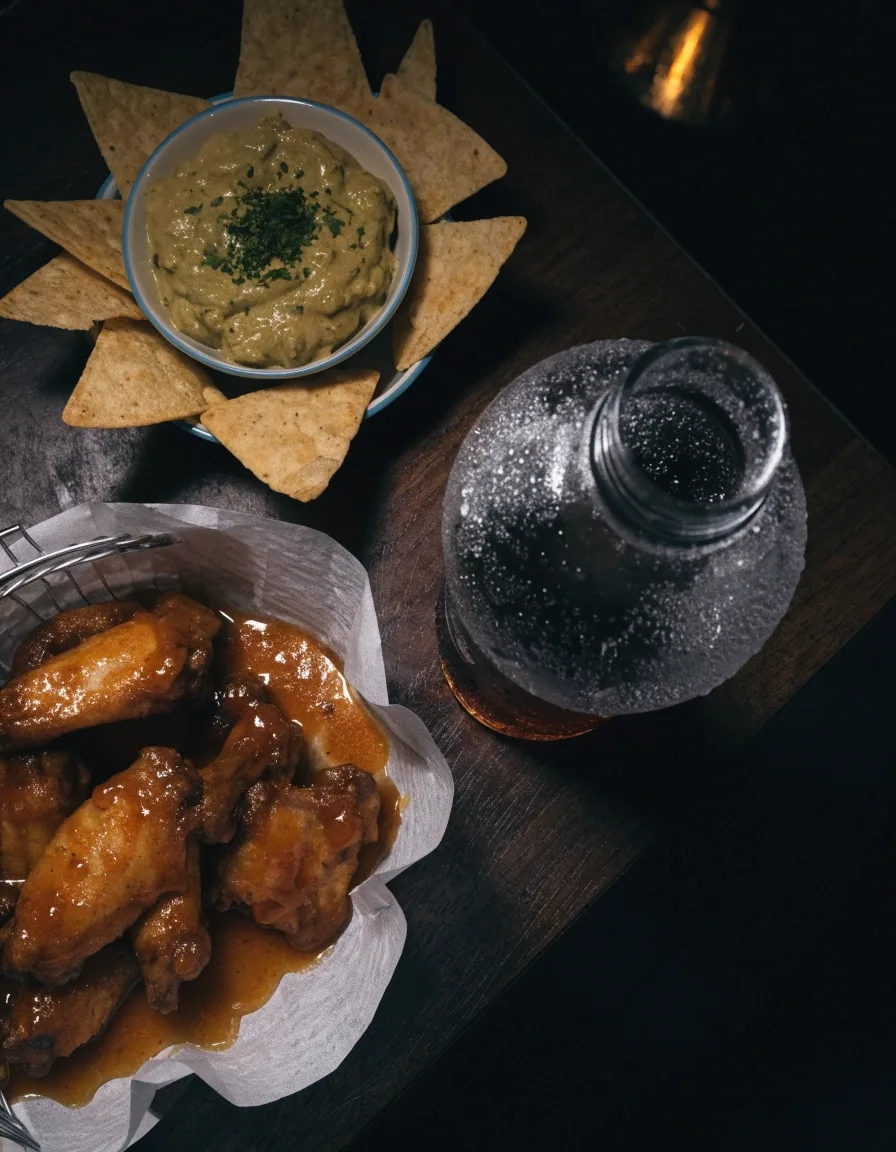
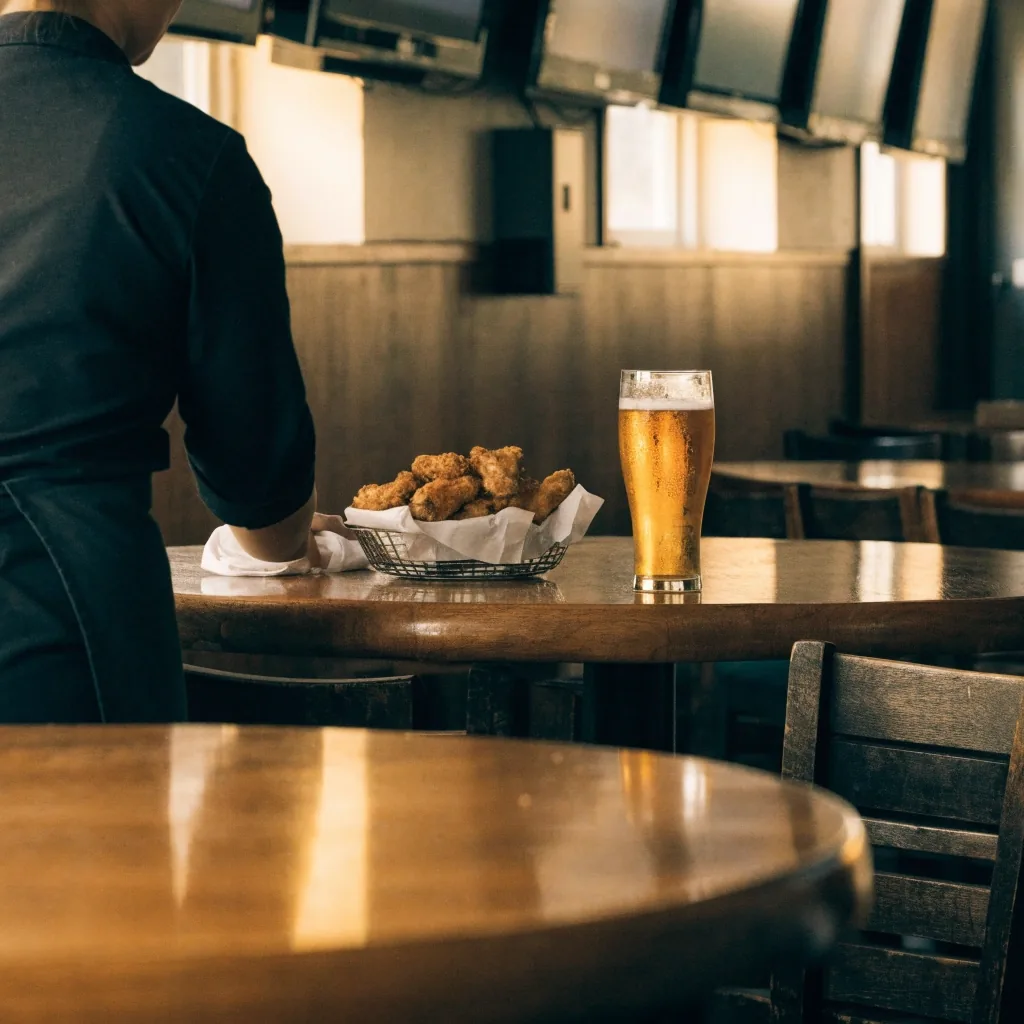
A tray of sauced chicken wings and a warm dip on a dark bar top under a single amber lamp
A shareables tray set on the bar rail before the room fills.

Shareables exist because groups are the core customer at a sports bar, and groups don't order neatly. A table of six will not agree on six entrées. Wings, Zingers, nachos, and dips solve that by turning dinner into a set of things everyone reaches for.

The format also helps the kitchen. Shareable items batch well and hold up under a heat lamp, which matters when the room fills during a game. Every large sports bar runs some version of this playbook, and the differences show up in how far the menu pushes the idea.

  • Wings, sauced and tossed reaches the whole table
  • Zingers and tenders holds under a heat lamp
  • Loaded nachos batches in one pass
  • Dips and chips no cutlery required

A shareable order is a negotiation the kitchen can predict. That predictability is the whole point.

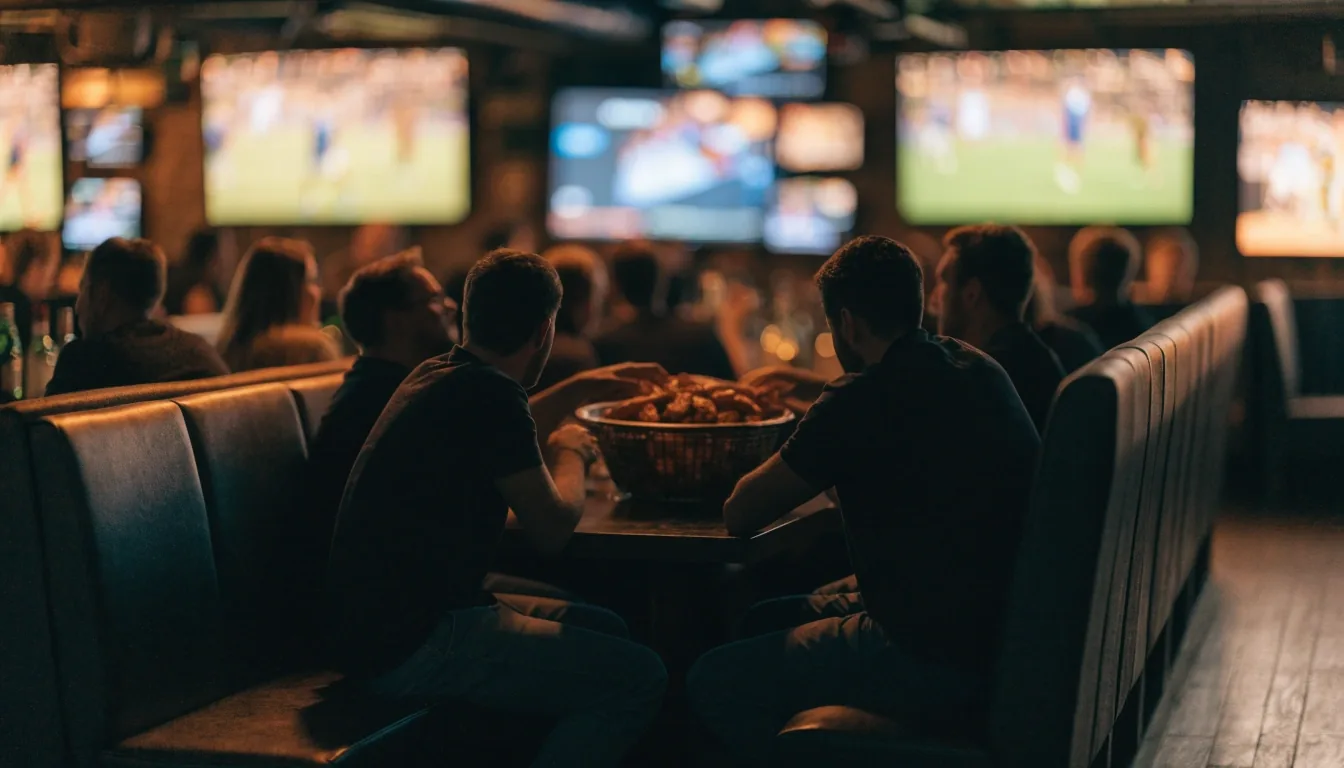
Silhouettes of a group at a booth reaching for a shared basket while screens glow behind them

The neighborhood spot versus the chain

A neighborhood bar-and-grill and a national chain compete on different things. The neighborhood spot wins on consistency of faces and knowledge of the regulars. The chain wins on predictability: you know what the menu looks like before you walk in, and the location near your hotel works the same way as the one near your house.

That trade is the reason a millersalehouse location can sit in a strip mall and still read like a local room — until you visit a second one and recognize the whole layout.

Miller's Ale House positions itself as a neighborhood restaurant despite operating 113 locations as of October 2026, and that phrasing is doing real work. It's a chain trying to feel local.

About the guide
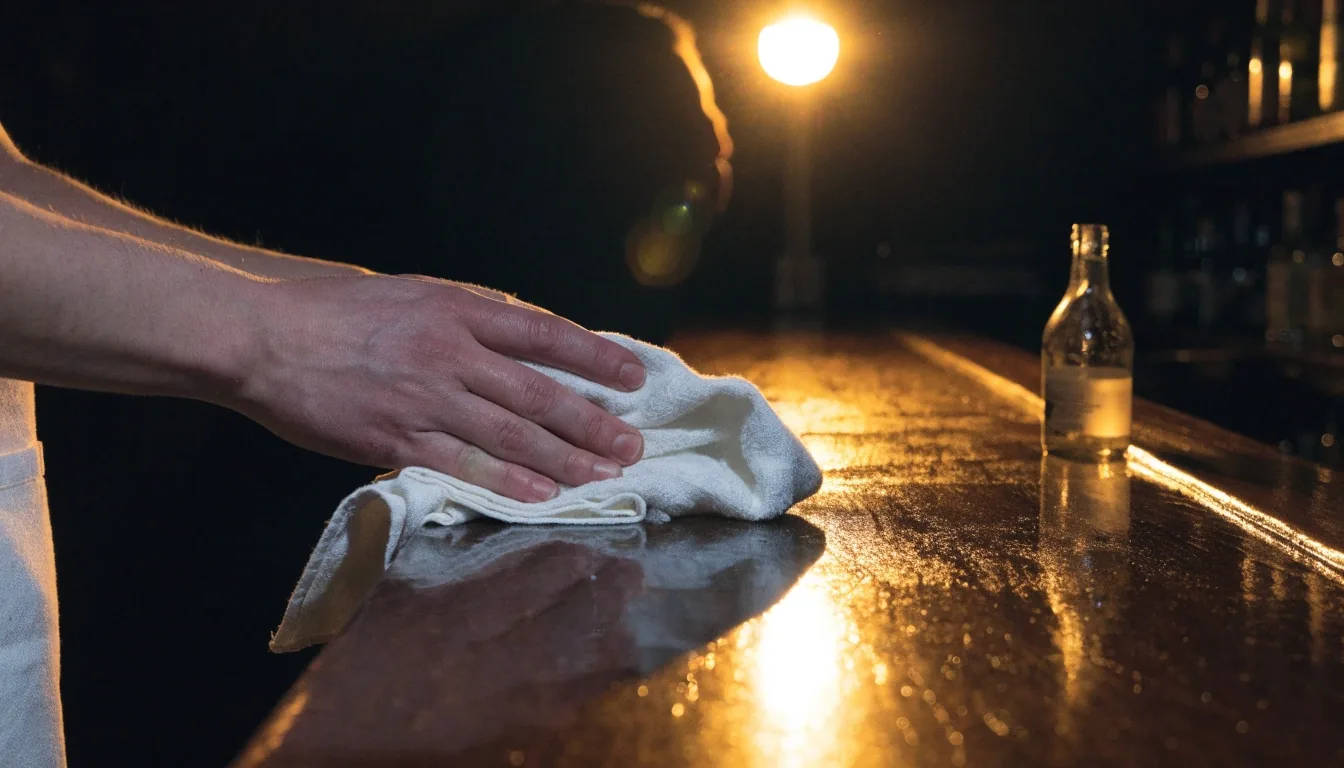
A bartender's hands wiping a dark wood bar counter under warm lamp light
The wiped counter, the folded cloth: the part of a neighborhood room that never shows up on a menu.

Walk into a chain on a Wednesday and the room still behaves like a room. The host stand knows roughly what the night will look like. The kitchen has the same mise en place it had last month. That stability is not glamorous, but it is exactly what a group of eight people with four different appetites needs when nobody wants to gamble on dinner.

Neighborhood spots carry the opposite risk and the opposite reward. You go for the regulars and the bartender who remembers your usual, and you accept that the menu is whatever the owner decided it should be. Nothing about that is wrong; it just means the two formats are answering different questions about the same evening.

When you are choosing between them, the useful question is not which one is better. It is which one fits the reason you are going out — a familiar booth with a predictable bill, or a room where the night can surprise you.

A category of its own

Wings as a category, not a menu item

Wings are one of the few bar foods that functions as an entire restaurant concept. Buffalo Wild Wings built a chain on them. Hooters built a brand on them. The variations are mostly about sauce, heat level, and whether the wing is bone-in or boneless, and those differences matter more to regulars than to first-time visitors.

If you are comparing sports bars on wings, the sauce lineup is the place to look first.

Sauce lineup

Count the sauces and the heat scale on the menu before you sit.

A short list usually means the kitchen does a few things well.

Bone-in or boneless

Whether the order is priced and sauced the same way for both.

Regulars notice; first-time visitors usually don't.

Portion and share

How the basket splits across a table of four or six.

It decides whether wings are a starter or the whole meal.

Wing programs live or die on the sauce list. Everything else is portioning.

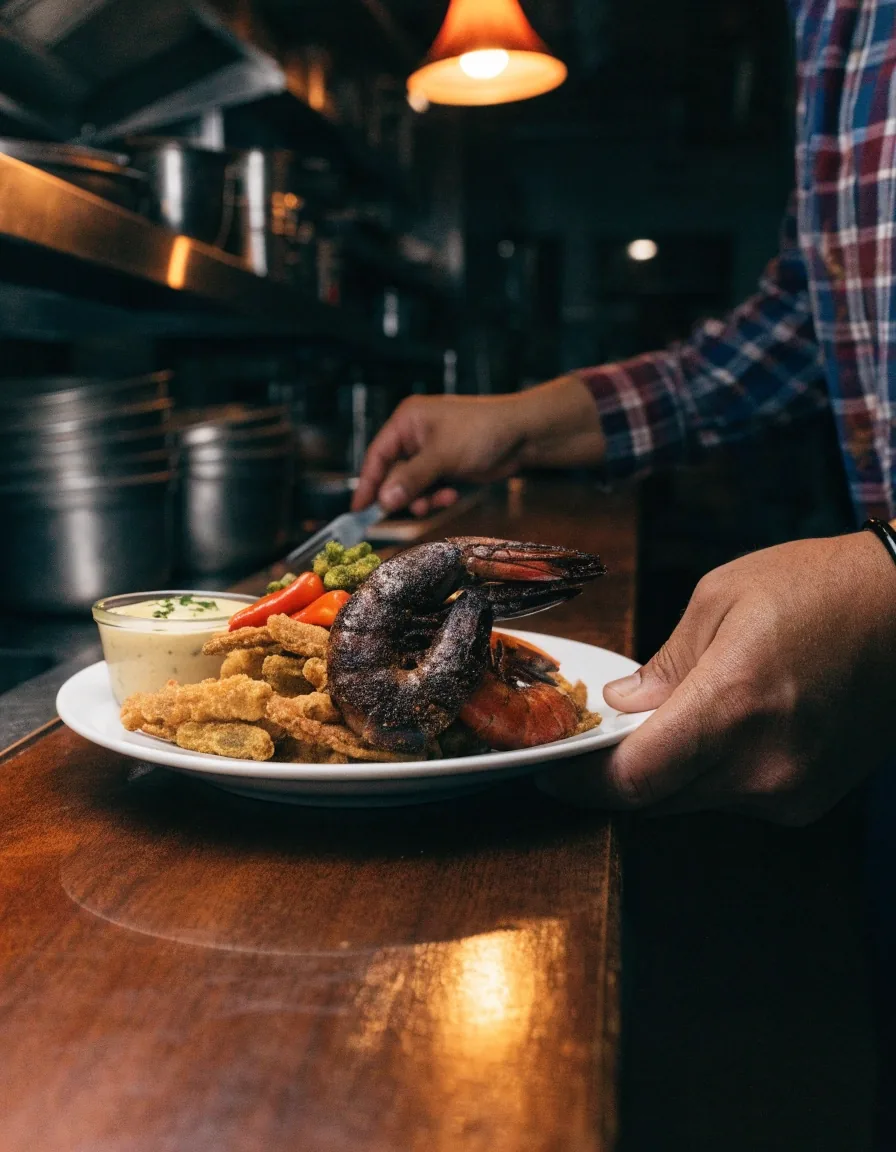
Louisiana-style casual dining dishes on a dark bar top under warm lamp light

Differentiators

What regional flavors do for a sports bar

Walk-On's Sports Bistreaux is the clearest example of a sports bar using regional food as a differentiator. Louisiana-leaning dishes give the menu a personality that a generic burger-and-wings list doesn't have.

The tradeoff is narrower appeal: a regional menu is more interesting to some diners and less useful to a group that wants the safest possible order. Most chains choose the safe route. The ones that don't tend to be more memorable and less universal — a real position, not a flaw.

A server's hands carrying a plate through a dark dining room under warm light

Lunch specials and the weekday

The hardest slot on the schedule is the one with no game attached.

Sports bars have a weekday problem. Game-day traffic is concentrated in evenings and weekends, which leaves weekday lunch as the hardest slot to fill. Lunch specials are the standard answer, and they work because the same kitchen that handles a packed Sunday can turn burgers and salads quickly at noon.

If you want to see a sports bar at its most functional and least chaotic, go on a weekday. The room is quiet enough to hear the kitchen, the tickets run in a straight line, and you get a fair read on whether the food is being cooked to order or just reheated from the last game night.

Weekday lunches are also the fairest test for a menu guide. A Friday-night version of a burger tells you less about the kitchen than the same burger at 12:20 on a Tuesday.

Steak on a bar menu

Steak shows up on bar-and-grill menus for a specific reason: it keeps the group from splitting up. One person wants a steak, everyone else wants wings, and without a steak option that group eats somewhere else.

LongHorn Steakhouse and Fogo de Chão approach steak as the main event, with different service models. A sports bar treats it as one more item that keeps a table together, and the execution reflects that.

How Miller's Ale House compares

Seafood and the lighter-dinner audience

Seafood on a casual menu attracts a different diner than wings do. Bonefish Grill is built around grilled fish and wood-grilled entrées for exactly that audience.

When a sports bar adds seafood entrées, it's widening the group it can serve rather than changing its identity. That's a reasonable move, and it's also why the seafood at a sports bar rarely competes with a seafood-focused chain on execution. You order it for the table, not for the plate.

The menu guide in full

Quality signals

How to tell a chain is coasting

A chain that's coasting usually shows it in the same places. The core items drift in quality while the menu keeps expanding. The room stops having a clear purpose. Service gets thin even when the restaurant isn't full.

The chains that hold up tend to do the opposite: a stable set of headline items, a format everyone in the building understands, and a menu that doesn't try to cover every occasion. When you are picking a spot, the small signs are more useful than the chain's own marketing — if you can hear the kitchen working, the format is still running the way it was built.

Watching for the signs is what the comparison page is for.

Questions about the journal

Short answers to the things readers ask before they start browsing the notes.

What is the journal for? Open

Short editorial notes and explainers on casual dining and sports-bar culture that don't fit the menu or comparison pages.

Can I suggest a topic? Open

Yes. Send it through the contact page and include the chain or format you want covered.

Suggest a topic
Are these posts dated news items? Open

No. The journal covers formats and patterns rather than breaking news. A note about shareable menus is still useful a year after it was written.

If you're picking a spot

How Miller's Ale House compares

Real columns on menu breadth, wings, steak, seafood and what the format is set up to do well.

Read the comparison page

If you're reading the menu

Miller's Ale House Menu Guide

What is on the menu, how the shareables and entrées are grouped, and what to expect when you order.

Read the menu guide

If you have a topic

Contact the guide

Send a chain or a format you want covered. Reach the desk Monday through Friday, 9:00 AM to 6:00 PM.

Suggest a topic
Miller's Ale House Guide · 1521 Bellevue Ave, Seattle, WA 98122, USA +1 564 465 5488 info@drempik.delivery